Planning a showroom development for a global appliance manufacturer
Reviewed a nine-week, three-phase showroom plan for a global manufacturer of high-end kitchen appliances, working through the risks, the dependencies and how monitoring fits alongside delivery.
9 weeks
Schedule reviewed, from scope definition to the final punch list
3 phases
Planning, launch and execution, and performance monitoring
5 risks
Risks and dependencies identified, from building permits to supplier coordination
Project background
The simulation involved reviewing and planning a showroom development project for a global manufacturer of high-end kitchen appliances. The objective was to understand the project requirements, organise key activities, establish a structured timeline and consider the factors that could affect successful delivery.
What I worked on
- Reviewed the initial showroom project plan and identified the key activities involved in project delivery.
- Worked with a plan organised in three phases: Project Conception and Planning, Project Launch and Execution, and Project Performance and Monitoring.
- Used a Gantt chart to keep tasks, owners, timelines and progress visible in one place.
- Considered project risks, dependencies, building approvals and supplier coordination.
- Looked at how project objectives, effort and cost tracking, and performance monitoring are built into the overall schedule.
The schedule
The plan runs over nine weeks and covers initial planning, scope definition, budget projections, risk management, project execution, supplier activities, appliance installation and final project checks.
Risks and dependencies
While working through the plan, I considered several factors that could affect the showroom project’s timeline and successful execution.
Building permit approval
- Delays in obtaining the required building permit could affect the planned start of construction and supplier activities.
- Early attention to approval timelines would help minimise scheduling disruptions.
Vendor and supplier coordination
- Supplier availability and coordination were important to keeping the project on schedule.
- Delays in vendor mobilisation could affect subsequent installation activities.
Gas installation and appliance installation
- Gas installation was a separate scheduled activity in Week 7, followed by appliance installation in Week 8.
- Coordination between these activities was important to avoid delays in the installation sequence.
Budget and resource management
- Initial budget projections and ongoing effort and cost tracking were included in the plan.
- Monitoring these throughout the project would help identify potential cost or resource issues early.
Project timeline and dependencies
- The project involved multiple activities across nine weeks, making task sequencing and milestone tracking important.
- Regular performance monitoring would help identify delays and maintain alignment with project objectives.
Planning considerations and trade-offs
What stood out was that the plan doesn’t leave monitoring to the final stage. Project objectives, effort and cost tracking, and performance monitoring all run alongside the rest of the schedule, which gives early visibility of potential delays, resource constraints and budget-related issues.
I also recognised the importance of sequencing approval and supplier-related activities before installation milestones, as delays in these areas could affect everything that follows.
The main trade-off I considered was balancing a structured delivery timeline with the need to keep flexibility for potential approval, supplier or coordination delays.
Key learnings and reflection
This simulation strengthened my understanding of how effective project planning creates a foundation for successful project execution.
I learned the importance of breaking a larger project into manageable activities, establishing realistic timelines, identifying dependencies and using a Gantt chart to maintain visibility of project progress.
It also reinforced that project management extends beyond completing tasks on schedule. Continuous monitoring of objectives, costs, resources and performance is equally important to identifying issues early and keeping stakeholders aligned.
If I were managing a similar project in a real-world environment, I would focus on establishing more detailed risk assessments, assigning clear accountability for individual deliverables, confirming supplier and approval lead times, and introducing regular progress reviews.
What I took away
What I enjoyed most about this simulation was seeing how different aspects of project management come together to deliver a successful outcome. Working through the showroom project gave me an opportunity to apply project planning concepts in a practical setting, from structuring activities and using a Gantt chart to considering risks, dependencies and ongoing performance monitoring.
It reinforced my belief that successful project delivery is not just about meeting deadlines, but about anticipating challenges, communicating effectively and keeping every part of the project aligned. Most importantly, it strengthened my interest in building a career in project management and applying these skills to real-world projects.
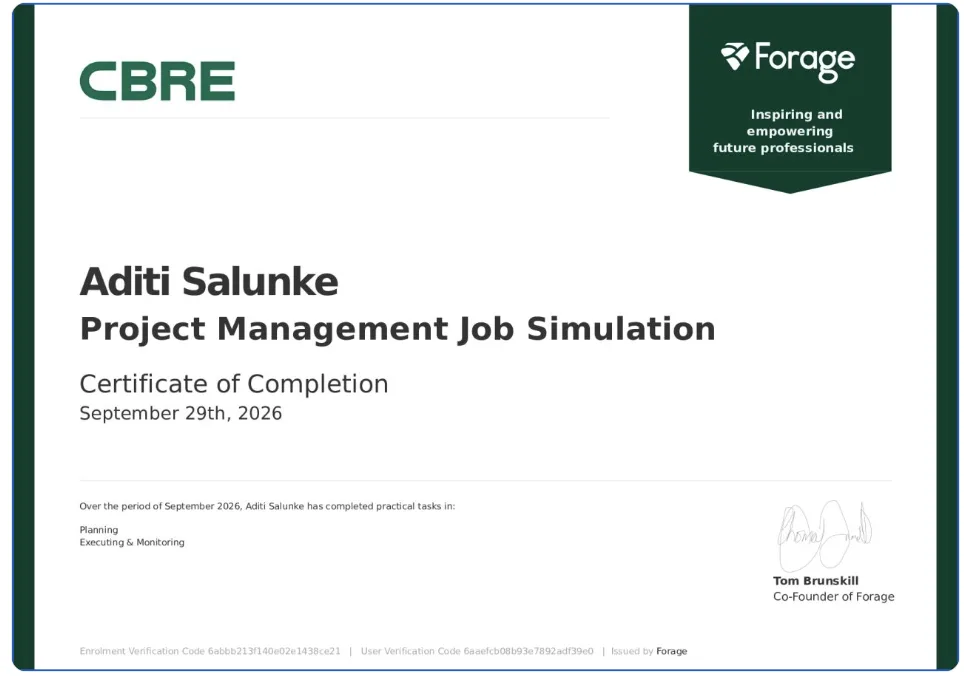
Certificate